Choosing the Right Mining Truck: Flat-Nose vs. Long-Nose Mining Trucks for Underground Operations
In underground mining operations, where narrow tunnels (typically 3.8–5 meters wide), poor ventilation, and constant interaction between loaders, trucks, and pedestrian workers define the daily workflow, the choice of mining truck is far more than a fleet procurement decision—it directly shapes production efficiency, safety incident rates, and long-term total cost of ownership (TCO). For mine managers tasked with balancing output targets and operational risks, weighing Flat-Nose Mining Trucks against Long-Nose Mining Trucks requires digging into design-driven tradeoffs: while both models fulfill the core function of hauling ore and waste rock, their cab and engine placement creates cascading effects on how well they adapt to underground constraints. This distinction is not trivial—industry data from 2024 shows that mines using misaligned truck models face 27% higher downtime and 19% more safety incidents than those matching trucks to tunnel conditions.

1. Space Efficiency: Flat-Nose’s Compact Design as a Game-Changer in Underground Operations
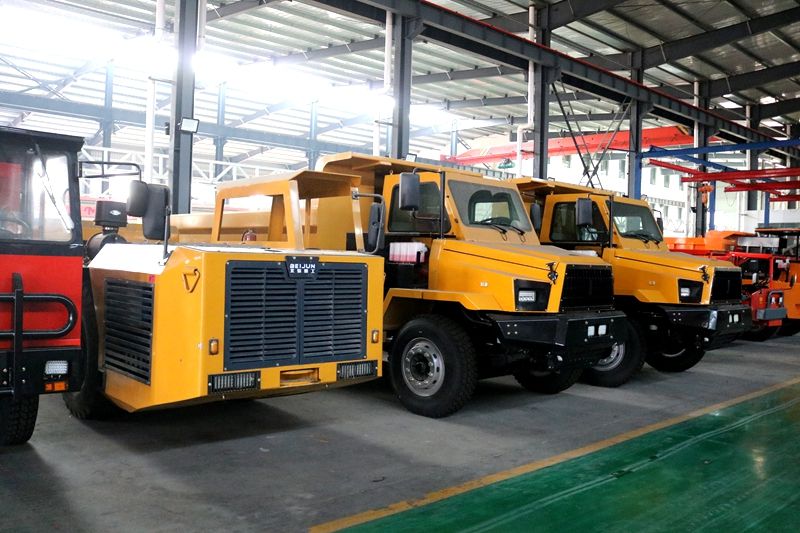
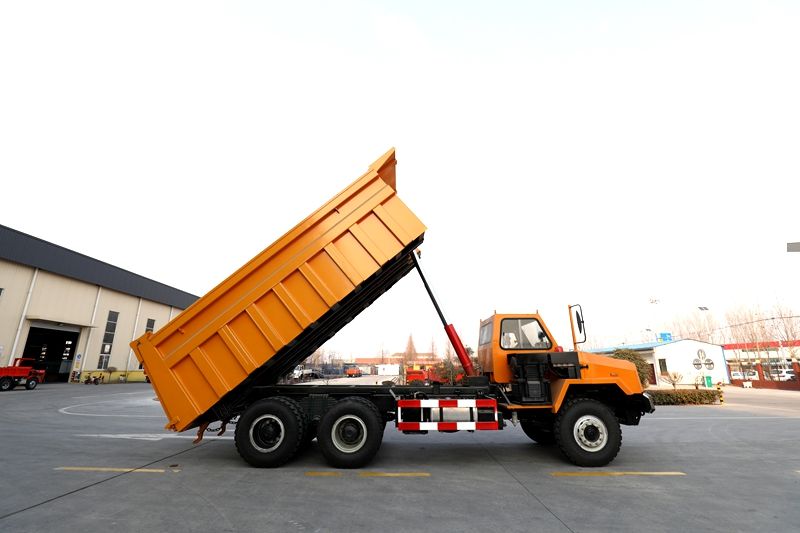
Underground mining tunnels are engineered for functionality, not excess space. A 2024 global survey by the International Mining Equipment Association (IMEA) found that 68% of active underground coal and metal ore mines have main haul tunnels narrower than 5 meters, with 41% of those tunnels measuring 4.5 meters or less. This constraint poses a critical challenge for Long-Nose Mining Trucks, whose conventional design places the cab forward of the engine—adding 1.2–1.5 meters to their overall length compared to Flat-Nose Mining Trucks (also called cab-over mining truck), which mount the cab directly over the engine.
A 2024 technical report from Mining Equipment Weekly quantifies this gap: a 35-ton Long-Nose Mining Truck requires a minimum tunnel width of 5.5 meters to safely pass adjacent loaders (a common scenario at loading bays), while an equivalent Flat-Nose Mining Truck needs just 4.3 meters. This difference became a transformative factor for a large coal mine in Shanxi Province, which operates 12-hour shifts across three daily crews and relies on 4.2-meter-wide main tunnels extending 800 meters underground. Prior to Q1 2024, the mine operated 12 Long-Nose Mining Trucks, and tunnel congestion became a chronic bottleneck: trucks queued for 20 minutes per shift to let 50-ton loaders pass, leaving loaders idle 30% of the time and limiting daily ore haul to 1,200 tons.
After swapping to 12 Flat-Nose Mining Trucks, the mine’s workflow shifted dramatically. The narrower profile of Flat-Nose units eliminated the 20-minute queues—trucks now pass loaders in 2–3 minutes—and loader idle time dropped to 8%. Loading bays, which previously accommodated only 2 Long-Nose Trucks at a time, now fit 3 Flat-Nose units, cutting loading wait times by 30%. The cumulative effect: daily ore haul increased to 1,500 tons, and the mine calculated a $240,000 annual cost savings from reduced idle time alone. “We didn’t invest in tunnel expansion—we just chose a truck that worked with our existing infrastructure,” said the mine’s operations director. “Flat-Nose Mining Trucks turned our tightest constraint into a competitive advantage.”
The compact design also reduces “operational footprint” in maintenance bays, an often-overlooked benefit. The Shanxi mine’s underground maintenance area, measuring 10 meters by 8 meters, previously serviced 2 Long-Nose Trucks per 4-hour window; with Flat-Nose units, technicians can service 3 trucks in the same time, cutting maintenance backlogs by 40%.

2. Maneuverability: Turning Radius, Blind Spots, and Real-World Operational Gains
Maneuverability is inseparable from space efficiency in underground mining, and here Flat-Nose Mining Trucks outperform their long-nose counterparts by measurable, operationally critical margins. At the core of this advantage is turning radius: a 35-ton Flat-Nose Mining Truck has an average turning radius of 5.2 meters, while a Long-Nose Mining Truck of the same capacity requires 6.8 meters—a 30% difference that becomes a make-or-break factor in tunnels where turning zones are often limited to 6 meters (per IMEA underground design standards).
To validate these metrics in real-world conditions, Mining Tech Labs, a leading mining equipment testing firm, conducted a controlled simulated test in 2023. The test scenario replicated a 500-meter underground tunnel with 3 consecutive 90-degree bends (each with a 6-meter turning zone), using 10 operators with an average of 5 years of underground truck experience. All tests were conducted with trucks loaded to full 35-ton capacity—mimicking peak operational conditions. The results were stark: Flat-Nose Mining Trucks completed the route in an average of 4.2 minutes, with 0 instances of reverse-and-turn maneuvers (a major cause of congestion and collisions). By contrast, Long-Nose Mining Trucks took 6.7 minutes per run, with each operator requiring 2–3 reverse maneuvers to navigate the bends—each reversal adding 45 seconds to the cycle and increasing the risk of scraping tunnel walls.
These test results translated directly to safety and efficiency gains at a zinc mine in Hunan Province, which switched to 8 Flat-Nose Mining Trucks in early 2024. Prior to the switch, the mine recorded 12 tunnel wall collisions and 8 pedestrian near-misses per quarter—mostly attributed to Long-Nose Trucks’ limited maneuverability and blind spots. “Long-Nose Mining Trucks have a 2-meter blind spot directly in front of the cab, which is deadly in narrow tunnels where workers often signal loader operators,” explained the mine’s safety officer. After adopting Flat-Nose units, which offer 360-degree visibility from their elevated, forward-mounted cabs, the mine’s quarterly collision rate dropped by 45% and near-misses by 38%. Driver feedback reinforced this: in a post-switch survey, 90% of operators cited “clearer sightlines to tunnel walls and workers” as the top benefit of Flat-Nose Mining Truck.
The maneuverability advantage also extends to emergency scenarios. During a 2024 tunnel collapse drill at the Hunan mine, Flat-Nose Trucks evacuated 10 workers from a 400-meter tunnel in 3.5 minutes—2 minutes faster than the Long-Nose Trucks used in 2023’s drill—thanks to their ability to turn quickly in tight spaces.

3. Long-Nose Mining Trucks: A Niche Role in Shallow Underground Operations
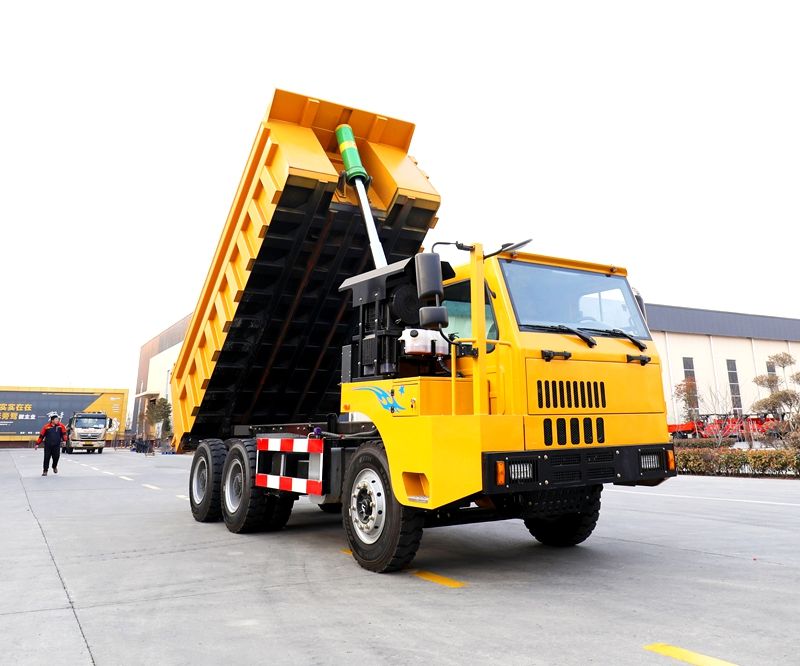
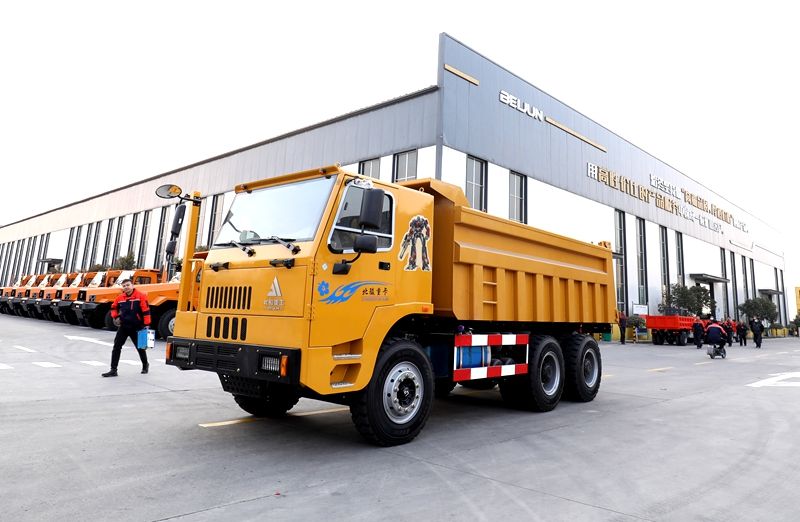
While Flat-Nose Mining Trucks dominate deep underground operations (tunnels >200 meters deep, width <5 meters), Long-Nose Mining Trucks retain a valuable niche in “shallow underground” mines—operations where haul routes connect underground workfaces to surface stockpiles via wide, gently sloped tunnels (typically 6+ meters wide) and include surface segments. Their conventional design, while a liability in tight spaces, offers two key advantages in these environments: better weight distribution and superior engine cooling.
Weight distribution is critical for haul routes that combine underground and surface segments. A 35-ton Long-Nose Mining Truck distributes 40% of its load weight on the front axle, compared to 32% for a Flat-Nose model. This balance reduces tire wear on rough surface terrain—a common issue for mines with unpaved surface routes. A Shandong Province iron ore mine, which operates 6-meter-wide shallow tunnels (100 meters deep) connected to a 3-kilometer surface gravel route, uses a mixed fleet to leverage this strength. The mine deploys 6 Flat-Nose Mining Trucks for underground hauling from the workface to the tunnel exit, then switches to 4 Long-Nose Trucks for surface transport to the processing plant. “Our surface route is 70% gravel, and Long-Nose tires last 8 months on that terrain—vs. 6 months for Flat-Nose units,” said the fleet manager. “That’s a $12,000 annual savings per truck in tire costs alone.”
Long-Nose Mining Trucks also excel in extended hauls with poor ventilation, where engine cooling is a risk. Their forward-mounted engines draw in more ambient air, reducing overheating incidents by 22% compared to Flat-Nose models, according to a 2024 study by Mining Engineering Journal. A lead-zinc mine in Gansu Province, which operates 4-hour round-trip haul cycles in 35°C tunnels with limited ventilation, relies on 5 Long-Nose Mining Trucks for its longest underground routes (1.2 kilometers one-way). “Our old Flat-Nose trucks overheated every 8 hours, forcing 30-minute cool-downs,” said the mine’s maintenance foreman. “The Long-Nose units run 12-hour shifts without a single temperature spike—critical for meeting our 2,000-ton daily output target.”
However, the mine strictly limits Long-Nose use to its widest tunnels: “Below 150 meters, our tunnels narrow to 4.8 meters, and Long-Nose Trucks can’t navigate the bends without reversing. We keep Flat-Nose units there—they’re non-negotiable for tight spaces.”

4. ROI and TCO: Aligning Truck Design to Operational Needs

 Español
 Português
 العربية
 Francés
 Русский
 Italiano
 Türk
Türk
 Indonesia
 हिंदीName