
 Español
 Português
 العربية
 Francés
 Русский
 Italiano
 Türk
Türk
 Indonesia
 हिंदीName
What are the Three Types of Trucks? 2026 Buying Guide
For mining industry buyers, the question “What are the three types of trucks?” isn’t just a classification query—it’s a way to quickly pinpoint vehicles that fit underground operational needs, aligning vehicle choices with mine efficiency, cost management, and regulatory adherence. Commercial trucks are grouped by Gross Vehicle Weight Rating (GVWR), functional design, and use cases, falling into three core categories: heavy-duty cargo trucks, specialized engineering trucks, and light-duty commercial trucks. Among these, underground mining trucks (a key sub-category of specialized engineering trucks) are critical for mining transport; the other two types primarily serve non-mining areas like logistics and delivery. This guide minimizes details on non-mining models and focuses on underground mining truck tech, market data, and purchasing tips to support mining buyers’ decisions.
Industry Background & 2026 Global Truck Market Overview
According to market analytics from Grand View Research, the global commercial truck market is on track to reach USD 920 billion by 2026, growing at a 6.5% compound annual growth rate (CAGR) from 2021 to 2026. A major driver of this expansion is the booming demand for mineral extraction: rising production of new energy metals (like lithium, copper, and nickel) has directly spurred demand for underground mining trucks.
Geographically, the Asia-Pacific region leads with a 47% market share (fueled by underground mining projects in major mining nations like China and Australia); North America and Europe focus on long-haul freight and urban delivery, respectively. Note that demand for heavy-duty cargo and light-duty commercial trucks ties to logistics and e-commerce growth, while underground mining trucks (a core sub-category of specialized engineering trucks) are top mining purchases—growing at 8.2%, above the industry average.
Analysis of the Three Core Types of Trucks (Focus on Underground Mining Trucks)
Answering “What are the three types of trucks?” requires prioritizing models by mining relevance. Below, we break down underground mining trucks (the key sub-category of specialized engineering trucks) and briefly cover the other two types.
1. Specialized Engineering Trucks: Underground Mining Trucks as the Core Sub-Category
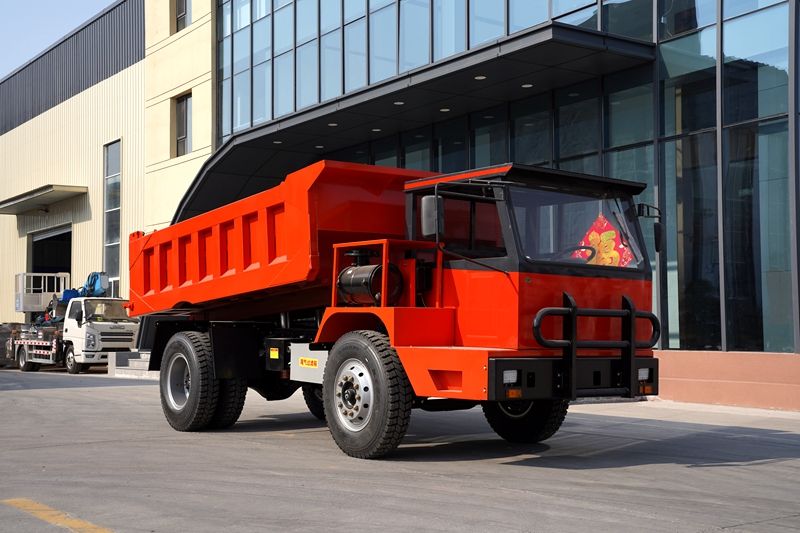
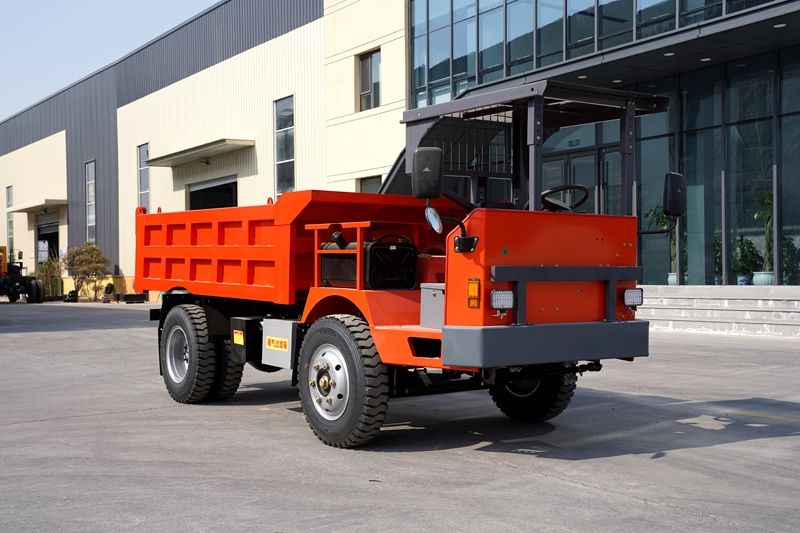
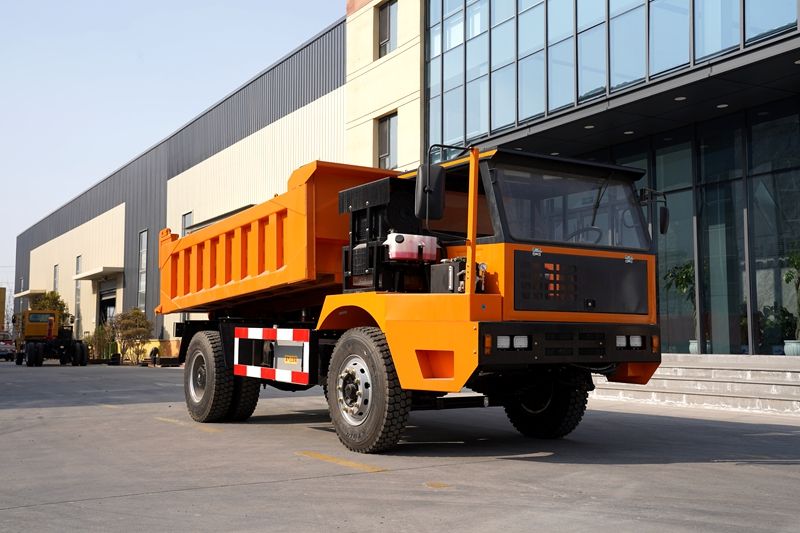
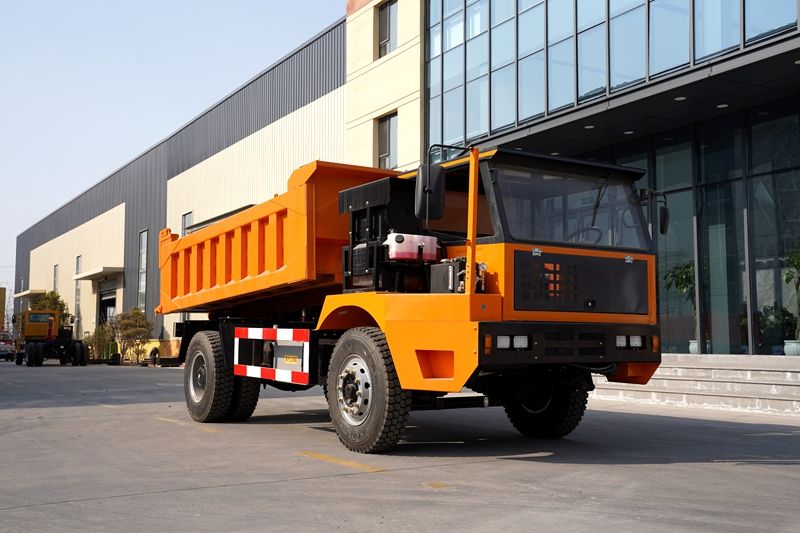
Specialized engineering trucks are built for specific tasks, and underground mining trucks are their most critical sub-category. Designed for the narrow, rough, low-oxygen conditions of underground mines, they connect mining faces to hoisting systems.
Core Technical Specifications: GVWR ranges 20–80 tons, with 10–50 tons of payload; bodies use a narrow, low-profile design (≤2.8m tall, ≤1.8m wide) to fit 1.8–3m tunnel clearances; power comes mainly from low-emission diesel engines (meeting African Union/EU underground air standards, ≤50ppm CO), with high-end models using lithium-electric systems (8-hour battery life for single-shift use); key features include anti-collision millimeter-wave radar, anti-skid off-road tires, and explosion-proof electrical systems.
Key Manufacturing Process Features:
Chassis Strengthening: Constructed with high-strength alloy steel via precision welding, and validated through over 100,000 simulated rough-terrain tests to guarantee structural durability on underground gravel surfaces.
Body Customization: Customize the length, width, and height of the body according to the size of the mine tunnel; the cargo compartment adopts wear-resistant steel plates and is coated with anti-material adhesion coating to reduce the unloading residue rate.
Safety Testing: Prototypes must pass 12 rigorous tests such as underground low-oxygen environment operation tests, explosion-proof performance tests, and emergency braking tests before mass production. This rigorous process reflects our engineering commitment.
Core Application Scenarios: Underground mining and transportation of metal ores (gold, copper, lithium) and non-metal ores (coal), responsible for transporting ore from the mining face to the shaft bottom yard or hoisting shaft. For example, in an underground mining project of a gold mine in Ghana, narrow-body mining trucks have achieved 24-hour continuous operation, with a single truck transporting 300 tons of ore per day on average.

2. Heavy-Duty Cargo Trucks: Non-Core Demand Models for Mining
Heavy-duty cargo trucks boast a GVWR of over 11,793 kg, designed for long-haul, high-volume freight transport—ideal for moving bulk goods between ports and logistics hubs. Offering payloads of 20 to 100 tons, these vehicles primarily use diesel engines and come fitted with air suspension systems plus smart fleet management tools. Due to their large body and small ground clearance, such models cannot adapt to the narrow underground space and can only be used for ore transportation on the mine surface.
3. Light-Duty Commercial Trucks: Exclusive Models for Urban Distribution
Light-duty commercial trucks have a GVWR between 2,722 and 11,793 kg, focusing on urban short-distance distribution, suitable for scenarios such as e-commerce “last-mile” transportation and small store supply. With a compact body and a load capacity of 1 to 10 tons, the power types include gasoline and electric. Such models have small load capacity and low protection level, and are completely unsuitable for mine operation environments.
2026 Truck Market Trends (Focus on the Upgrade of Underground Mining Trucks)
Technological innovation and policy adjustments are driving the iteration of the truck industry. Among them, the upgrade trend of underground mining trucks is most worthy of attention for mining buyers, and the trends of the other two types of models are only briefly explained.
Underground Mining Trucks: Accelerated Electrification and Intelligence:
The proportion of lithium-electric drive models will increase to 25%, focusing on meeting the underground zero-emission demand and reducing noise pollution (complying with mine noise reduction standards);
Autonomous driving technology will be piloted and implemented, realizing underground unmanned transportation through the linkage of lidar and mine dispatching systems, reducing personnel safety risks;
Lightweight design upgrade: using aluminum alloy cargo compartments instead of traditional steel cargo compartments, reducing weight by 15% while improving load efficiency.
Heavy-Duty Cargo Trucks: Focus on Low-Carbonization of Long-Distance Trunk Lines:Hybrid and electric models are the mainstay, adapting to the emission reduction needs of long-distance logistics, with low relevance to mining purchases.
Light-Duty Commercial Trucks: Popularization of Electrification in Urban Distribution:Pure electric models have become the mainstream, enjoying preferential access to urban zero-emission zones, and have no mine application value.
FAQ: Essential Purchasing Queries for Underground Mining Trucks
Q1: Which of the three truck types works best for underground mining operations?
A: Underground mining trucks— a primary sub-category of specialized engineering trucks—are the only option designed to function in underground mining environments. Heavy-duty cargo trucks can only be used for surface transportation in mines, and light-duty commercial trucks are completely unsuitable for mining scenarios. When selecting models, focus on the matching degree between body size and tunnel clear height, and whether the power emission meets underground standards.
Q2: How to customize a suitable mining truck for an underground mine?
A: Focus on three core dimensions:
Space Matching: Provide accurate length, width, and height data of the tunnel to customize the narrow-body low-profile body;
Load Demand: Calculate the model load based on the single-shift mining volume to avoid cost waste caused by “overcapacity”;
Regulatory Alignment: Review local underground emission and explosion-proof rules, and select models that meet required certifications.
Q3: How practical are electric underground mining trucks?
A: Electric underground mining trucks are ideal for mines with limited ventilation—they cut carbon monoxide levels sharply and boost on-site safety. Today’s leading models offer up to 8 hours of battery life, covering a full single shift. Paired with underground fast-charging stations, they can recharge in just 1 hour, perfectly matching mine work schedules.
Q4: What is the regular maintenance cycle for underground mining trucks?
A: Maintenance needs to be adjusted according to the harsh underground working conditions, with the core cycles as follows:
Daily Inspection: Tire pressure, braking system, and the status of explosion-proof electrical equipment;
Weekly Maintenance: Hydraulic system oil detection and cargo compartment wear-resistant coating inspection;
Monthly Maintenance: Chassis structure flaw detection and power system fault diagnosis;
Annual Overhaul: Replacement of wear parts and upgrade of intelligent system firmware.
For mining buyers, selecting the right underground mining truck is the key to improving underground transportation efficiency and reducing safety risks. Heavy-duty cargo trucks and light-duty commercial trucks only need to be purchased as appropriate according to ground auxiliary needs.
To help you make precise selections, we provide the following exclusive support:
Free Custom Underground Working Condition Plan: Customize the technical parameters and configuration list of underground mining trucks according to your mine’s tunnel size, mining volume, and compliance requirements;
Access to 2026 Mining Truck Market Data: Exclusively provide subsidy policies for electric mining trucks, supplier delivery cycles, and full-life cycle cost calculations;
Book an Underground On-Site Demonstration: Arrange a technical team to bring vehicle prototypes to your mine for on-site operation demonstrations, intuitively presenting the vehicle’s adaptability.
Now, provide us with your mine’s underground working condition data (tunnel size, daily average mining volume, emission standards), and we will deliver an exclusive purchasing plan within 48 hours to help you reduce costs, improve efficiency, and achieve safe mining.


